Pattern Floral V5: A Designer’s Real-World Embroidery Review
First Impressions: Soft, Balanced, and Ready for Stitching
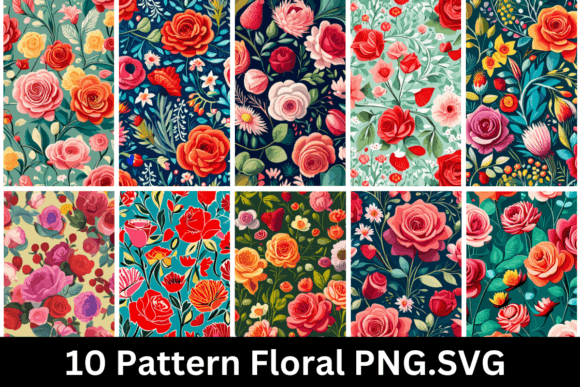
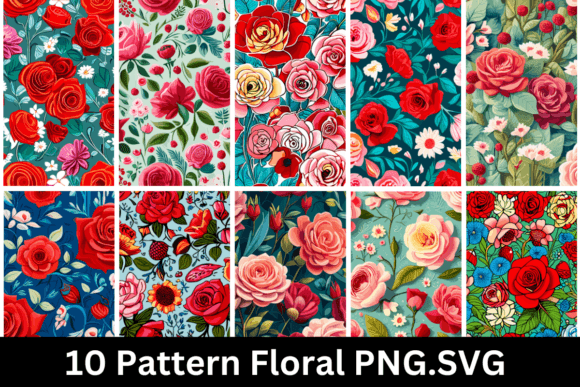
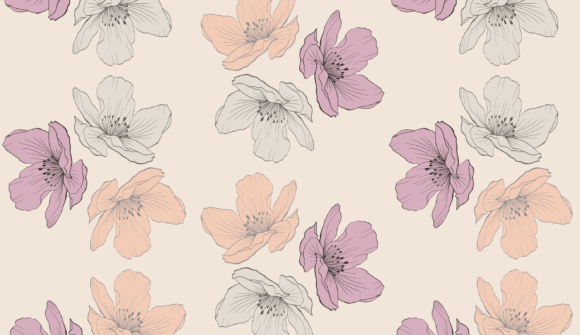
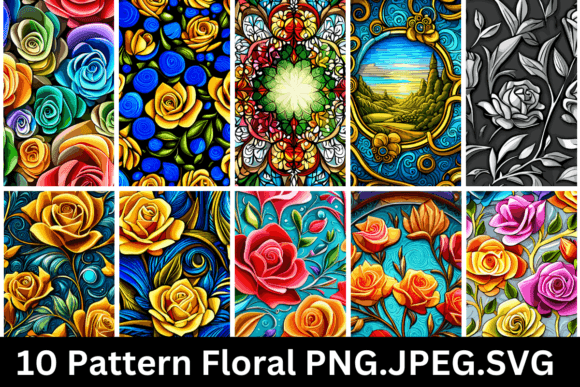
Opening Pattern Floral V5 feels like unrolling a well-curated sketchbook page — not overly fussy, not too sparse. Ten floral motifs, each with gentle curves, open centers, and rhythmic spacing. The illustrations lean botanical but avoid realism; think stylized peonies, trailing vines, and compact blossoms that breathe on fabric instead of crowding it. There’s no aggressive symmetry or rigid geometry — just organic flow. That makes Pattern Floral V5 feel instantly adaptable: equally at home on a linen tea towel as it does on a baby onesie or an embroidered denim tote.
A Real Project Test: Custom Tote Bags for a Local Boutique
Last week, I prepped three tote bags for a small-batch boutique launch — natural canvas, medium-weight, slightly textured. I chose one motif from Pattern Floral V5 (the 4500 x 5400 px version) and resized it to fit a 5" x 6" hoop. What stood out immediately was how the line weight held up: clean edges in the SVG file translated directly into crisp satin stitch borders, while the looser fill areas gave breathing room for dense fill stitch without puckering. Customers responded strongly to the “hand-drawn but polished” look — it read as intentional, not generic. That subtle distinction matters when selling handmade product online or at craft fairs.
Where Pattern Floral V5 Shines (and Where It Needs Thought)
Pattern Floral V5 works exceptionally well for:
- Custom apparel — especially sweatshirt embroidery and relaxed-fit tees where soft floral motifs soften the silhouette;
- Baby embroidery — the rounded shapes and open negative space prevent visual overload on tiny garments;
- Embroidered patch creation — clean outlines and moderate detail make it ideal for cut-and-sew patches;
- Holiday embroidery and wedding gifts — its warmth reads as timeless, not seasonal;
- Digital embroidery file use in Etsy listings — the included PNG and JPEG files generate clean printable mockups, and the SVG scales cleanly for branding previews.
But here’s what I watched closely:
- Small hoop sizes: The most detailed motif (a layered dahlia variant) starts to lose nuance below 3.5". If you’re stitching on caps or narrow wristbands, test that one first.
- Textured or stretchy fabric: On slubbed linen or lightweight jersey, I added medium-cutaway stabilizer — not because the design demanded it, but because the gentle curves benefit from extra support to hold shape.
- Dark fabric: The 300 DPI resolution helps, but thread color contrast becomes critical. I ran a black-on-charcoal test and swapped to cream thread — the difference in perceived clarity was immediate.
- Frequent-wash items (like kitchen towels or baby blankets): Avoid ultra-fine interior lines in the smallest versions. Stick to the 4096 x 4096 px or larger files where stitch density remains balanced and durable.
Design Assets That Support, Not Complicate, Your Workflow
Having all ten motifs in JPEG, PNG, and SVG formats isn’t just convenient — it’s functional. I used the SVG to adjust spacing for a repeating border on an apron hem, then dropped the PNG into my embroidery software for precise digitizing reference. The multiple pixel dimensions (6000 x 6000, 4500 x 5400, etc.) mean I didn’t need to resample or interpolate — just selected the size closest to my final hoop target. That saves time and preserves integrity, especially when preparing commercial embroidery projects for clients who expect consistency across batches.
What Pattern Floral V5 Adds to Your Finished Product
It elevates perceived value without shouting. Unlike hyper-saturated clipart florals, Pattern Floral V5 reads as considered — like something you’d commission, not download. That builds customer trust, especially for Etsy sellers and small shop owners positioning themselves as designers, not resellers. On personalized gifts, it avoids looking “template-y.” On boutique merchandise, it supports brand consistency when paired with neutral palettes or hand-lettered tags. And for craft business owners building a library of design assets, these motifs layer beautifully with monograms, simple typography, or even subtle watercolor backdrops.
Practical Notes Every Embroidery Designer Should Run Through
Before committing Pattern Floral V5 to your next project, take five minutes to:
- Test the chosen motif on scrap fabric matching your final substrate — texture changes everything;
- Check thread color contrast in both light and dark mockups (I use grayscale previews to spot weak tonal separation);
- Review stitch density visually — some motifs have tighter clusters near centers; confirm your machine handles them smoothly;
- Verify hoop size compatibility — especially if using curved surfaces like caps or pillow gussets;
- Inspect small details (stamen lines, vine tips) at 200% zoom — they must survive resizing and stitching;
- Use proper stabilizer based on fabric weight and motif density — don’t assume “medium” fits all;
- Confirm licensing terms before selling finished embroidered items or bundling Pattern Floral V5 as part of a digital product — the listing says “multiple formats” but doesn’t specify commercial use rights;
- Compare how the design reads on screen vs. stitched — sometimes subtlety gets lost in translation, and Pattern Floral V5’s quiet elegance needs that check.
Final Thought: A Thoughtful Tool, Not a Shortcut
Pattern Floral V5 won’t replace your sketchbook or your eye for composition — and it shouldn’t. What it does offer is a set of refined, production-ready motifs that behave predictably across real embroidery contexts. It’s the kind of graphics asset that lets you focus on execution, client nuance, and thoughtful presentation — not fighting pixelation or reworking outlines. Whether you're stitching a single holiday gift or scaling up for a small shop product line, Pattern Floral V5 earns its place in the working designer’s toolkit by being quietly reliable, visually cohesive, and genuinely stitch-friendly.